Fetch Package Inc.
Overview of impact
Fetch’s drivers and managers relied on slow third-party apps for scheduling and payments, while designers worked separately from product and engineering. I helped replace those tools with a single internal scheduling app and bring designers into product and engineering teams.
Designed internal scheduling and payments app
Replaced an outside vendor, saving $200K annually and cutting manager workload by an hour each week.
Integrated designers into product and engineering teams
Added weekly and bi-weekly checkpoints that designers owned, making the design process more transparent to stakeholders.
Established a formal research process
Consolidated design and research software, cutting annual costs by $6,000. Trained product teams in research methods and interviewing so they could conduct research independently.
Workforce Management
Replaced two third-party tools with one internal app, saving $200K yearly and reducing warehouse manager workload by eliminating manual changes.
Problem
Fetch managed driver scheduling and payments in two separate third-party tools. Neither gave drivers or managers what they needed to do their jobs effectively.
Goals
- Build a single native app for scheduling and pay, replacing third-party tools
- Increase driver engagement and shift acceptance
- Automate driver payroll and give drivers visibility into their pay
Details
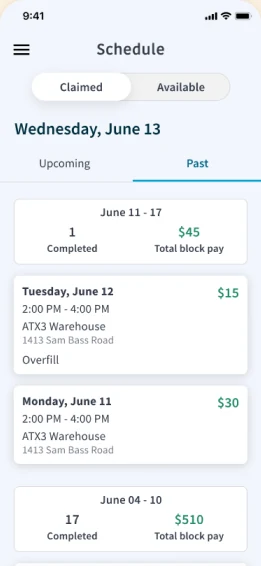
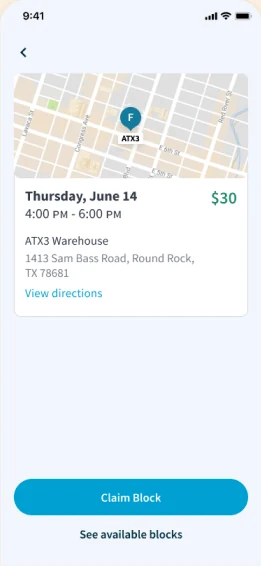
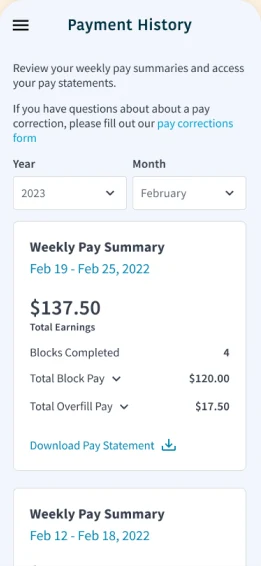
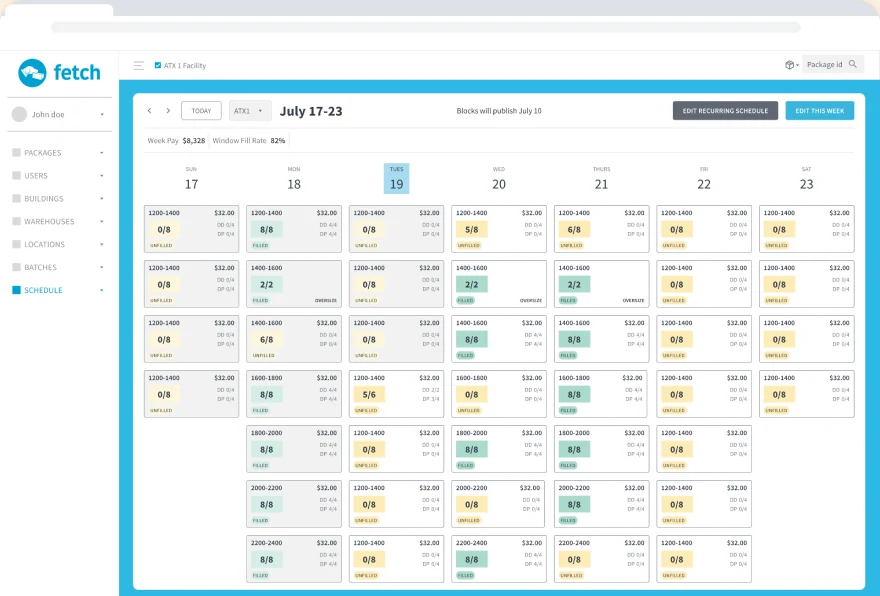
This work covered two connected parts, scheduling and payments, with one goal: moving drivers and managers into a single app. The third-party scheduling app was slow, gave drivers inaccurate information about available shifts and made it easy to select the wrong warehouse by mistake. Payments were a manual process in a separate application, which gave drivers limited visibility into what they were paid and required managers to review driver payments every week. Manager research sessions and two rounds of driver usability testing shaped a native scheduling tool where drivers could select and manage their shifts and managers could manage schedules more easily. We also automated payroll and gave drivers more granular visibility into their payment history in the same app they used for shifts. Managers no longer needed to review weekly payments, saving an hour of work each week.
Payments and Scheduling
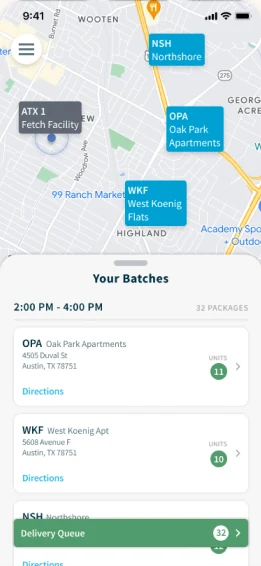
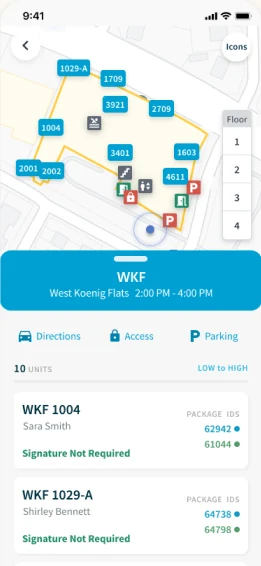
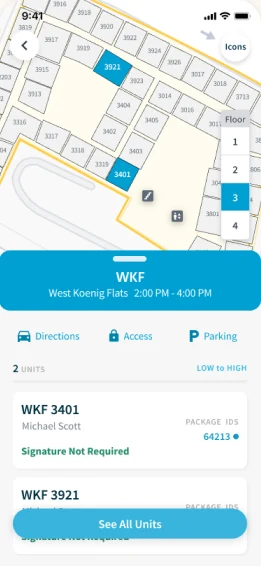
Apartment Maps
Problem
Fetch’s contract drivers had trouble navigating apartment properties to complete package deliveries, and driver support struggled to route them correctly or give accurate details.
Goals
- Improve the completion of package deliveries
- Resolve inaccurate building access information
- Give drivers better complex layouts and in-complex unit mapping, and reduce outreach to driver support
Details
Contract drivers had trouble getting to apartment complexes, getting access to buildings and finding their way around inside complexes to finish deliveries. Driver support also had trouble routing drivers to the right destinations and giving accurate details. Updates to the map service aimed to fix inaccurate access information, provide better complex layouts so drivers could prepare for arrival, and add better in-complex unit mapping so drivers could complete deliveries accurately and contact driver support less often.
Driver Maps View